Best time to visit Squamish by month
The best time to visit Squamish for warm weather and relatively little precipitation is July or August. The average daily high is 24.5 °C in both months, while November gets 383.0 mm of precipitation and coincides with the main bald eagle watching period in Brackendale. Pick your month by the activity you most want to do.
The figures are 1991 to 2020 climate normals for Squamish Airport. The high and low columns are monthly averages of daily highs and lows. Precipitation is the monthly total in water equivalent. Use the figures to compare months in the valley and check the forecast for the elevation where you plan to hike.
September is a useful comparison if you plan to split your visit between the river and the trails. The valley still averages a daily high of 20.7 °C, with 125.0 mm of monthly precipitation. A flexible itinerary leaves room to move a day on the water if the wind or the road to the river changes your plans.
| Month | High (°C) | Low (°C) | Precipitation (mm) |
|---|---|---|---|
| January | 4.5 | −0.9 | 379.1 |
| February | 7.6 | 0.0 | 195.2 |
| March | 10.4 | 1.3 | 245.5 |
| April | 14.5 | 3.7 | 149.6 |
| May | 18.9 | 7.2 | 87.9 |
| June | 21.1 | 10.3 | 66.9 |
| July | 24.5 | 12.4 | 47.5 |
| August | 24.5 | 12.2 | 54.0 |
| September | 20.7 | 9.3 | 125.0 |
| October | 13.9 | 5.4 | 270.8 |
| November | 7.6 | 1.7 | 383.0 |
| December | 3.8 | −1.0 | 339.6 |
For a summer stay, compare your base with the trailheads and river stops you plan to visit. A central address is convenient for supplies, while the area you choose for an early departure depends on where you want to spend the day.
Plan a rafting outing
This river excursion fits seasonal activity planning; check base access before travelling.
Hand-picked tours, booked through GetYourGuide. Prices are indicative starting prices in US dollars (as of November 2026). Tap a tour for live availability and the current price in your currency.

Cheakamus rafting in season
Find a trip date within the rafting season and choose your pickup option when planning the day.
Summer hiking, rafting and kite season
Squamish in July and August gives you the warmest valley conditions for planning a hike, with monthly precipitation of 47.5 mm and 54.0 mm respectively. Wet granite makes the ladders and chains on the First and Second Peaks of the Chief more demanding. For the higher routes in Garibaldi Provincial Park, check trail conditions, snow and any vehicle pass rules for your chosen date and trailhead. Use the Squamish hiking guide to compare the access routes before choosing a trail.
For kitesurfing at Pepahím̓/Spit Island, the 2026 season ran from 15 May to 15 September, with shuttles on windy days from Sp’akw’us Feather Park. Look up the operating season and wind for the day you intend to ride. Staying flexible gives you time to switch to a land activity if the water plan changes.
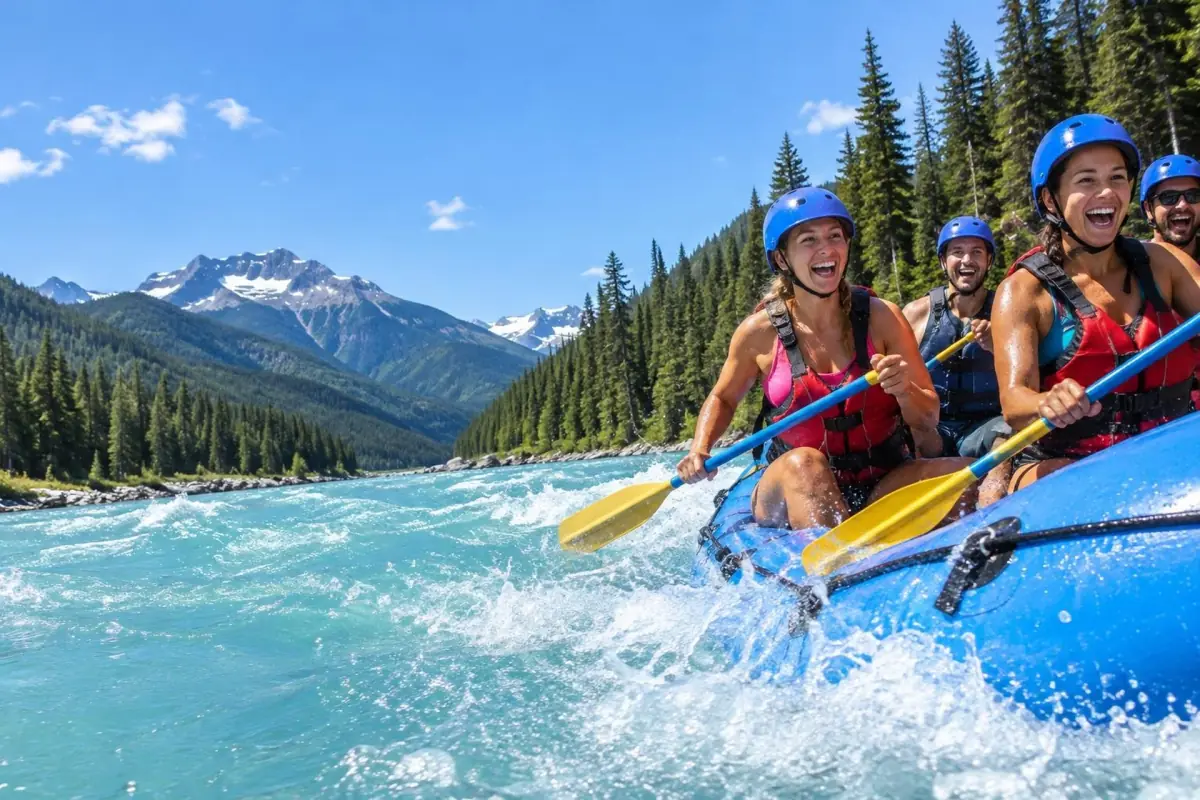
The guided Cheakamus rafting trip has a 2027 season window of 24 April to 26 September. The class I to II trip takes 3 to 5 hours in total, including about 1.5 hours on the water. Participants must be at least 5 years old, weigh at least 50 lb (22 kg) and sign a waiver. Rafting gear and instruction are included, with return transport from Squamish or Whistler depending on the pickup choice. If you plan to drive to the base, check access on Squamish Valley Road before setting out.
Rain, bald eagles and winter roads
Brackendale’s Eagle Run is the place to look for bald eagles from November to February, especially in November and December when salmon runs draw birds to the river. Bring binoculars and rain gear to watch from the dike. The protected park across the river is closed to visitors in winter. Weather and salmon numbers influence how many birds you see.
Road and mountain conditions need their own checks in winter. Follow posted tire requirements when driving to Squamish and carry chains for Diamond Head from October through May. Garibaldi’s higher routes can have snow and avalanche conditions even when the valley feels mild. Plan a lower outing if mountain conditions are beyond your group’s experience.


Questions about Squamish by season
Which months are warmest in Squamish?
July and August share the highest average daily maximum at 24.5 °C in the valley. The average daily lows are 12.4 °C in July and 12.2 °C in August. Bring layers for starts early in the day and check conditions separately for higher trails.
When should I go to Brackendale for bald eagles?
November and December are the main months for watching eagles in Brackendale. The broader season follows the salmon runs from about November to February. Bring binoculars to Eagle Run so you can scan the river from the dike while keeping your distance from the birds.
Can I plan a summer trip around both hiking and kitesurfing?
Yes. July and August fall within the 2026 kite shuttle season and are relatively dry in the valley. Keep your days flexible around wind for the shuttle and around trail conditions for the hike. Check both on the date you plan to go.